
- Loaders
- FabricNeoForge
- Downloads on Modrinth
- 2.7K
- Followers on Modrinth
- 42
- versions
- 22
- Updated
- October 7, 2026Oct 7
- Published
- in 2026
At a glance
Needed both in the game and on the server
OpenComputers II is a spiritual successor to OpenComputers. It carries some of the core ideas with it, such as configurability and sandboxing. However, there are also many changes, such as the mod using actual, emulated hardware.
Computers in this mod run on either a RISC-V or a Z80 architecture, based on the installed CPU. This allows running Linux and using it much like you'd use it normally. For example, networking uses an emulated network card and regular ethernet frames, so different Linux computers can communicate just as you'd expect. For the Z80 the mod ships CP/M, for that retro itch.
Overview
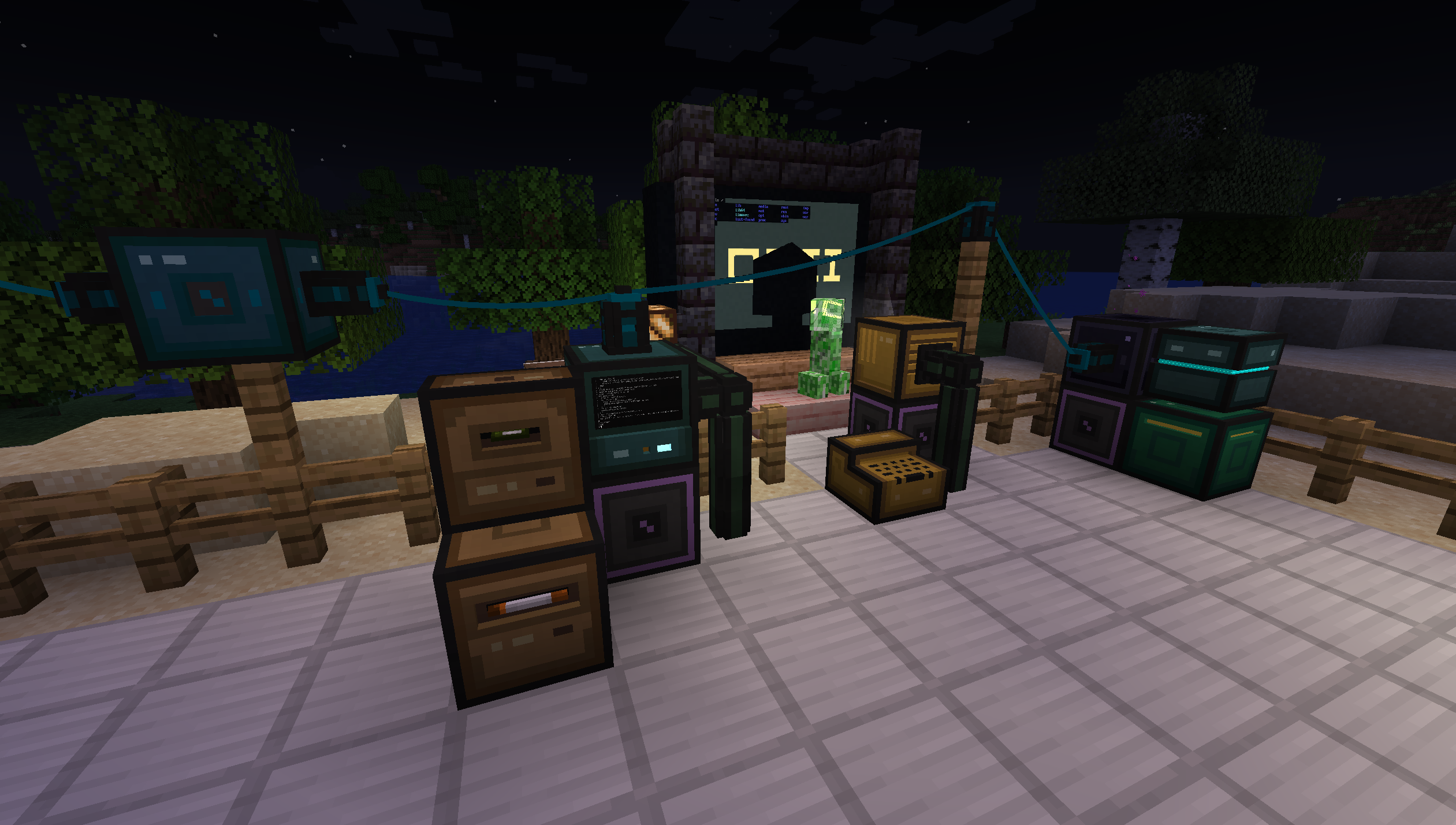
The mod provides stationary computers and mobile robots. While computers can connect to other in-world devices via bus cables and extension cards, robots can move through the world and interact with it via installed modules. Computers can communicate with each other using network or serial cards and cables.
To get started with the mod, it is strongly recommended to craft The Computerists Handbook, an in-game manual item with information on all the blocks, how to build your first computer and so on. It can also be read online.
Computers and robots consume energy (RF/FE), so it is recommended to play this mod in combination with some other mod that provides energy generation. This can be disabled in the configuration.
Operation
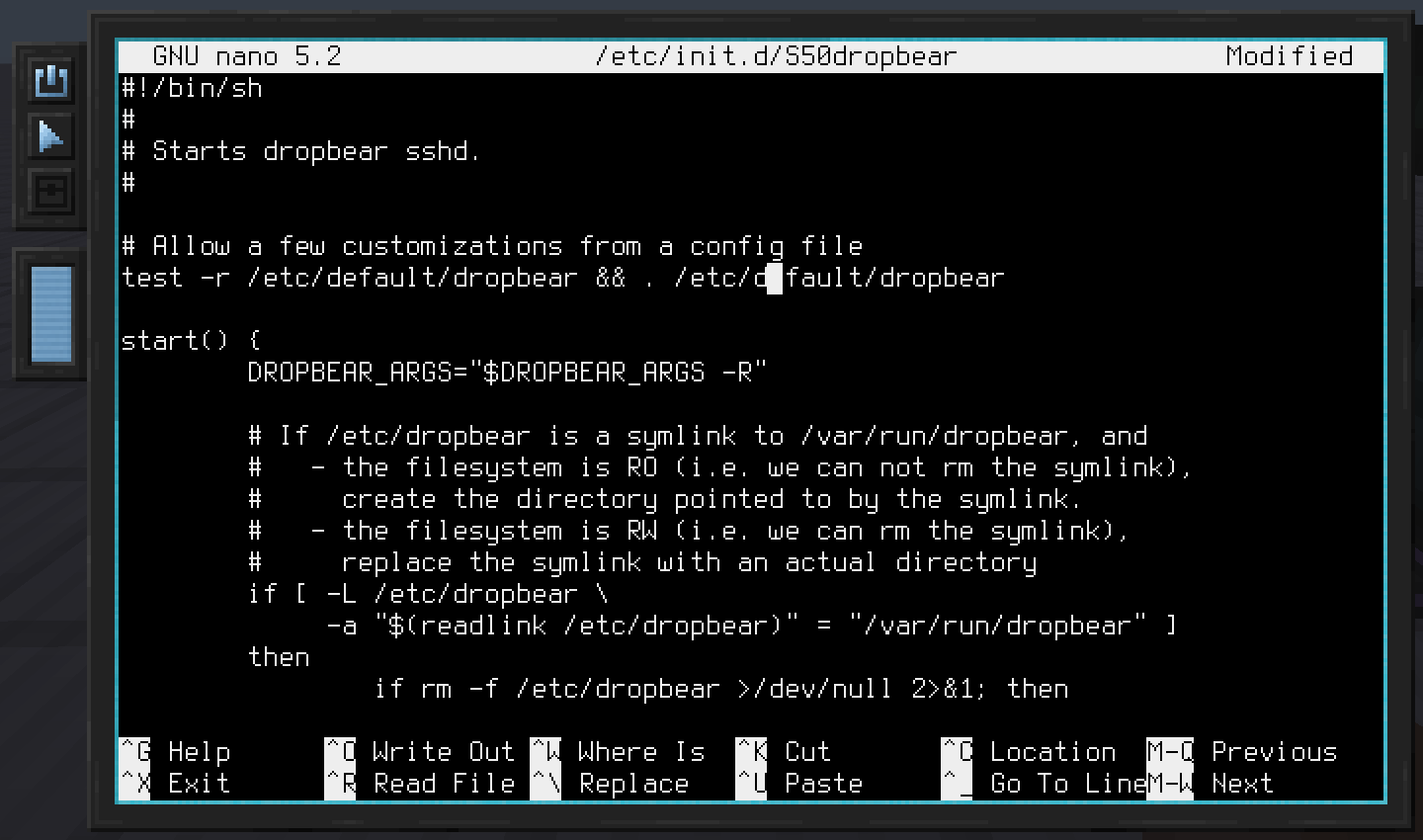
The main operating system used by the mod is Linux. It comes with a list of well-known utilities, such as the text-editors vi and nano.
To enable easy scripting, Lua and Python is also included. Many of the Minecraft specific devices, such as inventories, the Redstone Interface Block and general mod-interoperability use a high-level API that is intended to be used through Lua/Python. This eases both adding integrations with other mods, as well as using these APIs when scripting in the game.
Here's an example snippet that sends a redstone signal through a Redstone Interface Device:
require("devices"):find("redstone"):setRedstoneOutput("up", 15)There's also a mid-level API that uses a simpler, binary protocol. It is what's used on the Z80 to talk to devices, but also available on RISC-V/Linux.
Modularity
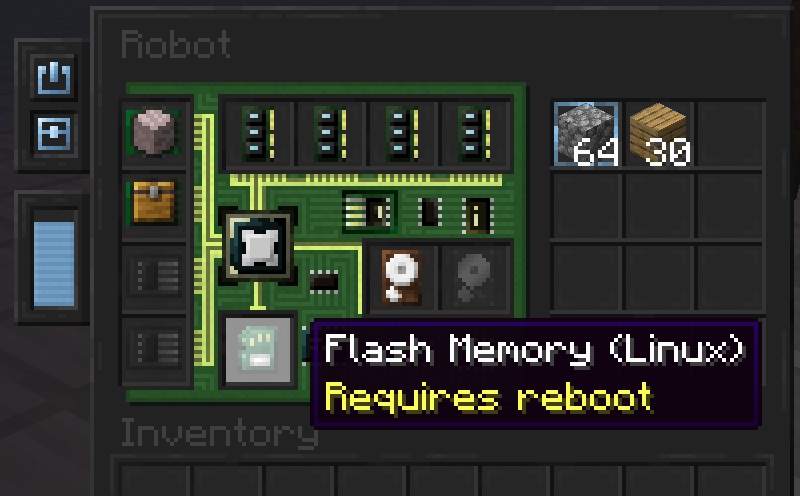
Computers and robots can be configured using various device items. Shared device types include memory (RAM), firmware and hard drives. Computers furthermore allow installation of extension cards, such as the Network Interface Card, whereas robots allow installation of modules, such as the Block Operations Module, which enables robots to break and place blocks.
FAQ
How to install OpenComputers II?
Install Fabric for your Minecraft version, download OpenComputers II for the same version and loader, put the file into the mods folder and launch the game with the loader profile.
Which Minecraft versions does OpenComputers II support?
OpenComputers II has builds for Minecraft 1.21.1.
Is OpenComputers II needed on the server?
Needed in the game and on the server
Similar mods
All technology mods →


More mods by this author
 Scannable↓ 320K
 OpenComputers↓ 310K
 TIS-3D↓ 70.8K
Often needed together
 Architectury API↓ 107M
 Markdown Manual↓ 80.1K